How to build a site that brings in more direct orders
Almost every owner starts with the design: a colour, a typeface, a photo of the front. Your guest starts with the menu, and with whether they can order from you tonight.
Start with what the site has to deliver
Ask ten owners what they want from their new site and nine open with the design. Dark or light, which typeface, which photo at the top. The most enjoyable question, and just about the last one that matters.
Your guest arrives with a job to do. A site that handles it in ten seconds pays for itself. A site that buries the menu three clicks deep costs you money you never see leaving.
Before you start, write one sentence down: what this site has to have delivered in three months. More collection orders, or more tables on a Thursday. Stick it above your screen. Anything that does not contribute can wait.
Do not build from scratch
You can have a restaurant site built by hand. But you are a chef or a host, not a developer, and those weeks never come back.
A website builder handles the boring part: hosting, the security certificate, mobile rendering and a template that works. What is left is the part nobody else can do: your words, your photos, your menu.
| Route | Strong at | Weak at |
|---|---|---|
| General builder | Design and freedom | Menu logic and ordering |
| Ordering module on your till | Tickets on the printer | Being found, and design |
| Restaurant platform | Menu and ordering in one | Less design freedom |
| Bespoke agency build | Exactly the way you want it | One large bill, slow changes |
Three things stay in your own name whichever route you take: the domain, the words and the customer data. A domain registered in your builder's name only hurts on the day you want to leave. Buy yours this week, even if you build nothing else yet.
Ordering happens on your own address
An order button that links out to Thuisbezorgd is not a button, it is a redirect. You pay commission on a guest who was already in your doorway, and next time they open the app.
So ordering belongs on your own domain. The guest stays with you, their details stay with you, and an order that comes in directly costs you no commission to Uber Eats or Deliveroo.
The button sits top right on every page and it says Order. Not View menu, not Find out more.
Attach something that rewards coming back, even if it is dessert on the fifth order. Not for the discount, but because the guest then starts with you.
Get found before you get beautiful
A site nobody finds is a menu in a drawer. Search optimisation sounds technical, but the part you handle while building is just writing down what you are and where you are.
- Put your cuisine and your town in the page title. Italian restaurant in Deventer, not Welcome.
- Give the dish you are known for a page of its own.
- Give every location its own page and address.
- Write address, phone and opening hours identically everywhere.
- Keep pages fast. Oversized photos are the most common reason they are not.
Then connect the site to your Google Business Profile and put your web address in it. For many guests that profile is the first page they see of you, before they reach your site. Do the same on TripAdvisor.
This is the foundation, not the whole house. The rest is about your profile, your reviews and your neighbourhood. Get it right now, because catching up later costs more.
Show people who is in the kitchen
Does a restaurant need an about page? People come for the menu and the address, so strictly speaking, no. And yet it is what separates you from the five other places on the same street.
A guest rarely chooses on food alone, but on the feeling that someone cares. You create that with a story, not a list of core values. Write it as you would tell it at a table.
- When did you know you wanted a place of your own?
- Why this kitchen, this city, this street?
- Which dish on the menu is your own favourite?
- What makes a good evening, seen from the kitchen?
The wood oven from Naples, your mother's sauce, the fishmonger you have used for twelve years: those are the lines that stay with people.
Photos do the rest
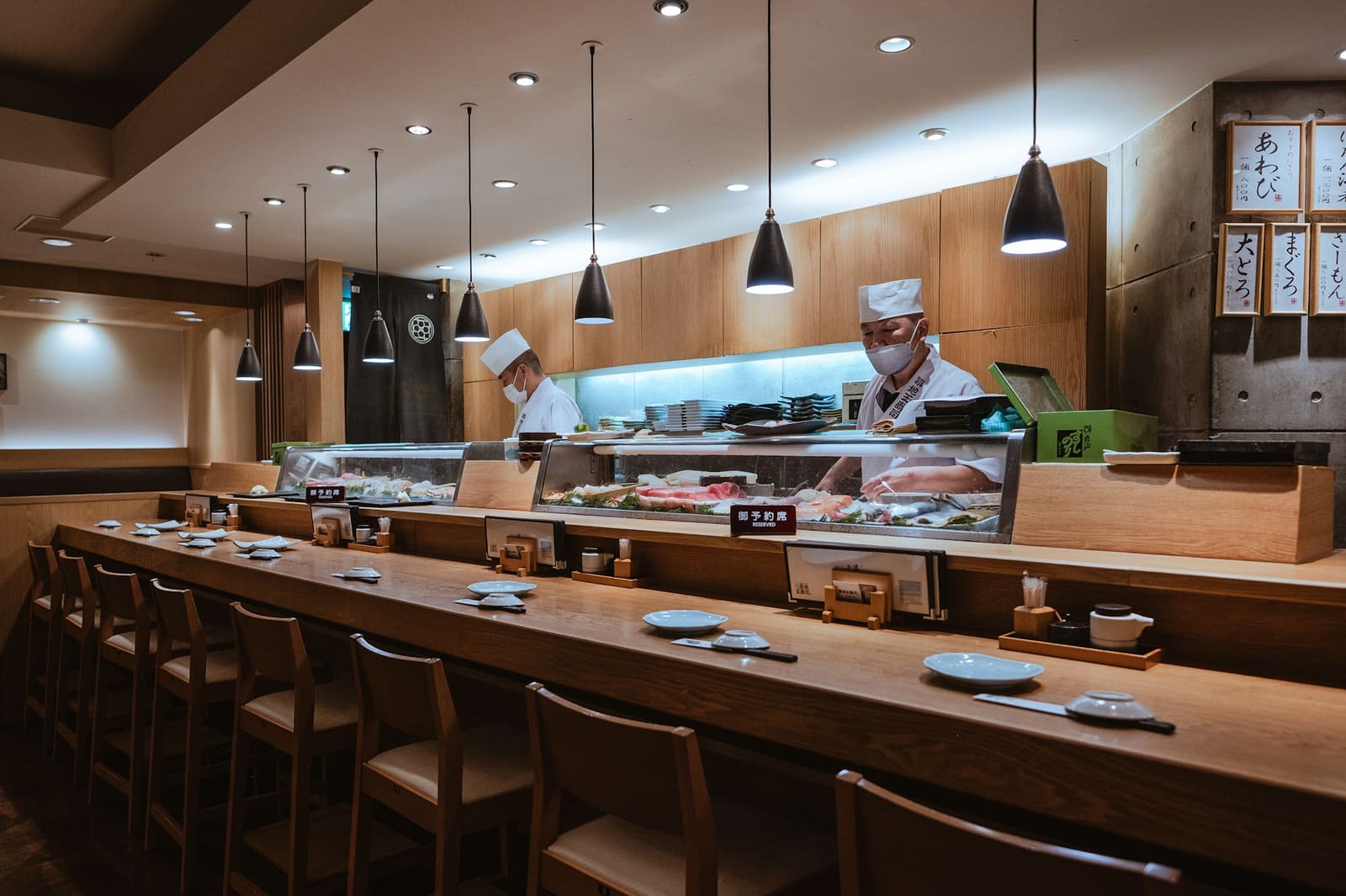
For social media your phone is fine, for your website it is not. Book a photographer once, with your ten best sellers, the room in evening light and the people who work there. Compress the photos afterwards, because a slow page loses the guest the photographer just won. Give every image alt text, so screen readers can follow.
Finish with four or five real reviews, quoted exactly, with the source named: Google or TripAdvisor. For many guests reviews are the last check before they order. If it passes on your own site, they stop looking elsewhere.
Bookings, contact and the pages everyone forgets
If you work with tables, booking has to be as easy as ordering. A form in your inbox works fine, until it fails on a Saturday night. A reservation system lets the guest pick a time and tracks your covers.
Put your rules there too, because that is where the friction starts: how long you hold a table, when you ask for a deposit, how late it can be cancelled, and what you offer for a private event.
Contact details belong in the footer of every page. If you sell online, more belongs there than most sites show.
Two pages get forgotten almost every time: an events page, so nobody arrives at a locked door, and gift cards, because a card ends up with someone who does not know your restaurant yet.
Going live is half the job
The site is online. Nothing happens. That is normal, and precisely the moment most owners decide it did not work. A new site needs a push, and it comes from inside your own restaurant.
- Put your web address in your Google Business Profile, your social profiles and your email.
- Print it on your takeaway bags, your receipts and your paper menu.
- Put a QR code by the till and on the tables pointing at your ordering page.
- Send one email to everyone who has ordered from you before.
- Ask ten regulars to open the site on their own phone while you watch.
That last one is the most important and the cheapest. Within five minutes you see where people get stuck, and it is almost never where you expected.
After that it is still not finished, because a website ages faster than a building. Opening hours over the holidays, a menu that moves with the season, an events page without last year on it. Book half an hour for it every month.
Common questions
- How much does a restaurant website cost to build?
- It depends on the route. A general website builder is a fixed monthly fee and you do the work yourself. With a restaurant platform, ordering, hosting and visibility are bundled into that fee. An agency asks a one-off fee that is quickly a multiple of a year's subscription. So do not look only at the monthly price, but at what each order costs you.
- How long does it take to build a restaurant website?
- Building is not the slow part. With a modern builder something that works is standing within a few days. What sets the timeline is your words, your photos and getting your menu into text. A bespoke agency build runs into weeks or months, because of the design rounds.
- What pages should a restaurant website have?
- The minimum is five: a homepage, the menu as text, ordering or bookings, an about page, and contact with your address, phone and opening hours. Events and gift cards are common additions. More important is that your menu is real text and the order button always within reach.
- Can I add online ordering to my own website?
- Yes, and it is usually the first step that pays for itself. Just make sure the ordering happens on your own domain rather than redirecting to a delivery platform. With a redirect you pay commission on a guest who was already with you, and you lose their details.
- Should my menu be a PDF or real text?
- Real text. A PDF is close to unreadable on a phone without pinching, a screen reader cannot work through it, and search engines do not read the dishes as individual words. That loses you exactly the searches you want to be found on. If you want a PDF for printing, put it alongside.
- How do I make my restaurant website work on mobile?
- Assume nearly everyone opens your site on a phone, out and about and often without wifi. Choose a builder that adapts to the screen, keep photos light, make buttons big enough for a thumb, and make your address and phone tappable. Then place one complete order yourself.